

MAP Alliance policy insights
Global Trends in Menopause Care Policy
Although some government bodies mention menopause in health strategies, only a few countries have begun formulating legislation at the national or subnational level.
MAP's first issue brief, The State of Menopause Care Policy, evaluates recent progress in policymaking and identifies priorities for future action. It reveals that support from governments remains fragmented, inaccessible, and inequitable.
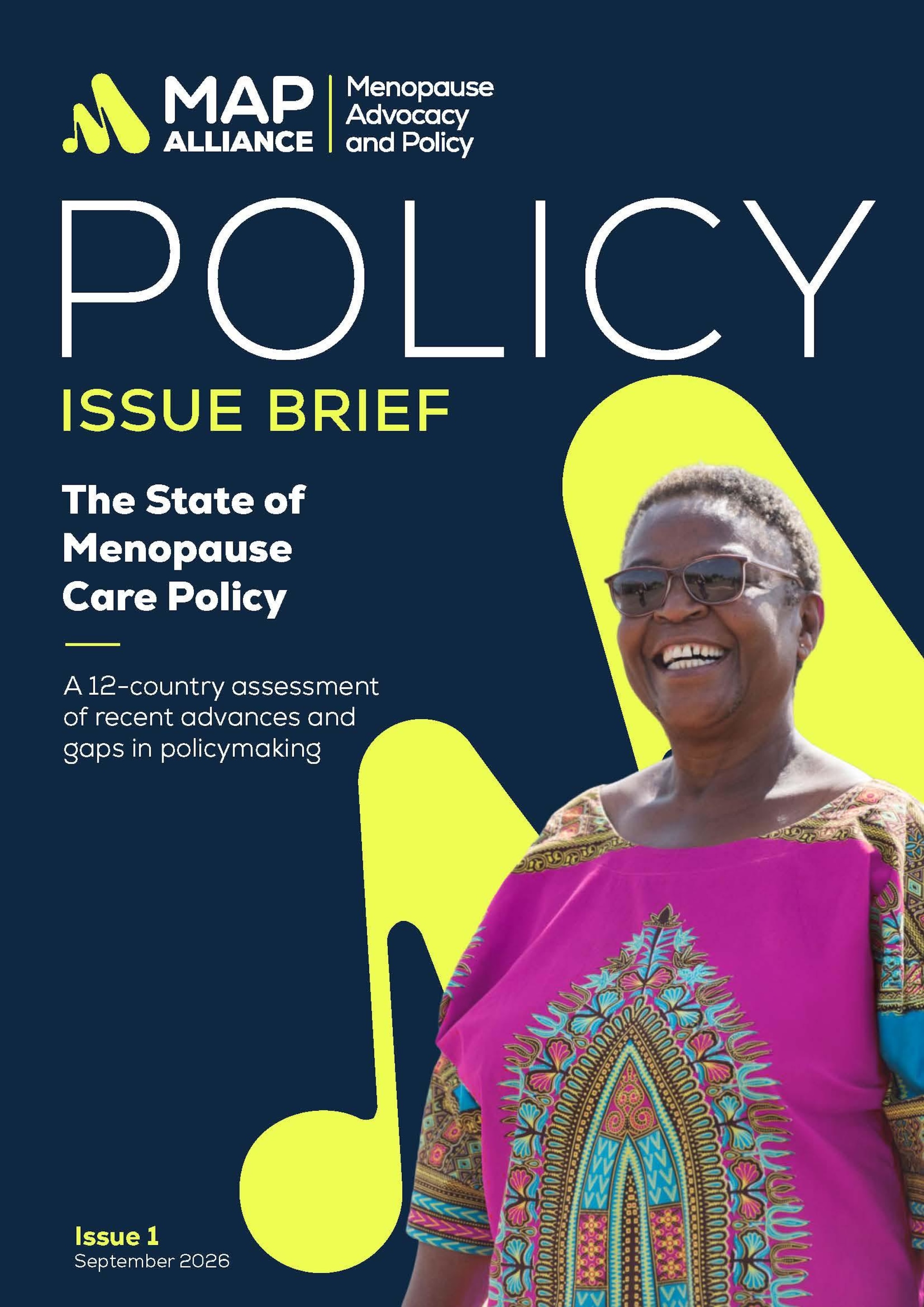
Issue Brief #1: The State of Menopause Care Policy: A 12-country assessment of recent advances and gaps in policymaking
This brief evaluated progress in policymaking across five priorities: public awareness, HCP education, access to care, workplace support, and research funding. It features a heat map that shows progress being made in policymaking in 12 countries across Europe, North America, and South America over the last 5 years, and turns a spotlight on 14 recently enacted laws advancing menopause care.
Plain Language Summary
By 2030, nearly 500 million women globally are projected to be of menopausal transition age.1 Left unaddressed, these menopausal symptoms exact a heavy toll on women’s quality of life, long-term health, and career trajectory, while placing systemic pressure on healthcare systems, employers, and national economies.
Public policy plays a vital role in addressing these challenges. Governments can improve women’s quality of life by funding research to better understand menopause, preparing healthcare professionals to recognize and manage symptoms, improving coverage and access to consultations and treatments, and setting reasonable expectations to support women in the workplace. Well-designed policy can also reduce inequities by directing resources and support to women who are least served by existing systems.
The State of Menopause Care Policy: A 12-country assessment of recent advances and gaps in policymaking examines emerging policy approaches and identifies practical opportunities for change. This policy brief features a heat map, tracking progress across the five menopause policy areas that have received the greatest attention from policymakers over the past 5 years. It also spotlights 14 regional laws enacted across Europe, North America, and South America that are advancing menopause care.
Together, these insights underscore the cost of policy inaction for women, health systems, employers, and national economies. The assessment shows that government support remains fragmented, inaccessible, and inequitable.
1. Wilson M, Schmidt I, Alam M. The Health and Economic Impacts of Menopause: Policies and Investments to Advance Care, Opportunity, and Equity. FP Analytics; May 2025.
Available at: impactsofmenopause.com. Accessed September 2026
Summary of Key Findings
The menopause care gap will not be closed one policy or one country at a time, it demands coordinated action across governments, health systems and the private sector.
The Menopause Advocacy and Policy (MAP) Alliance commissioned this report to assess recent progress in policymaking and to highlight opportunities for reform to address these personal and system pressures. The report is based on research into changes over the last 5 years in the menopause care policy landscape in 12 countries across Europe, North America, and South America.
The findings and the heat map point to a clear conclusion: menopause care policy reform is still at an early stage in most countries. No country studied has yet developed a mature, fully funded, coordinated and equitable approach to menopause care reform across five key domains: public awareness, HCP education, access to care, workplace support, and research funding.
Although some government bodies mention menopause in health strategies, resolutions, and parliamentary discourse, only a few countries have laws in force or have begun formulating legislation at the national or subnational level. The research highlights the following:
Public awareness initiatives – While a growing number of public campaigns are raising awareness about menopause, they often fail to challenge the stigma surrounding it
HCP education – With few exceptions, the countries studied do not encourage or require HCPs to pursue specific medical education or training for menopause care
Access to menopause care – Specialist consultations often require out-of-pocket payment. Where regulator-approved treatments are reimbursed, the spectrum of covered therapies remains limited
Workplace support policies – Policy provisions for working women remain sparse globally. The United Kingdom (UK) stands out as a clear leader in advancing national dialogue and workplace guidance
Funding for research – Dedicated government funding for menopause care research remains severely underdeveloped across all surveyed countries
The transition from awareness to enforceable policy is both urgent and achievable. It is time to eliminate the "menopause penalty" and build resilient healthcare systems that support women throughout every stage of their lives.
“When we educate people about perimenopause and menopause, we empower them with knowledge that reduces anxiety and builds confidence… Many individuals, including myself, feel blindsided by symptoms they don’t recognize or understand, often suffering in silence for years before seeking help. By normalizing conversations about menopause and providing accurate information, we can help ensure that Mainers approach this transition with preparedness rather than confusion or fear."
Former State Rep. Kristen Cloutier
Press release, March 31, 20251
1Press release, Cloutier introduces legislation to help address the knowledge gap around perimenopause and menopause,
March 31, 2025, https://www.maine.gov/housedems/news/cloutier-introduces-legislation-help-address-knowledge-gap-around-perimenopause-and-menopause